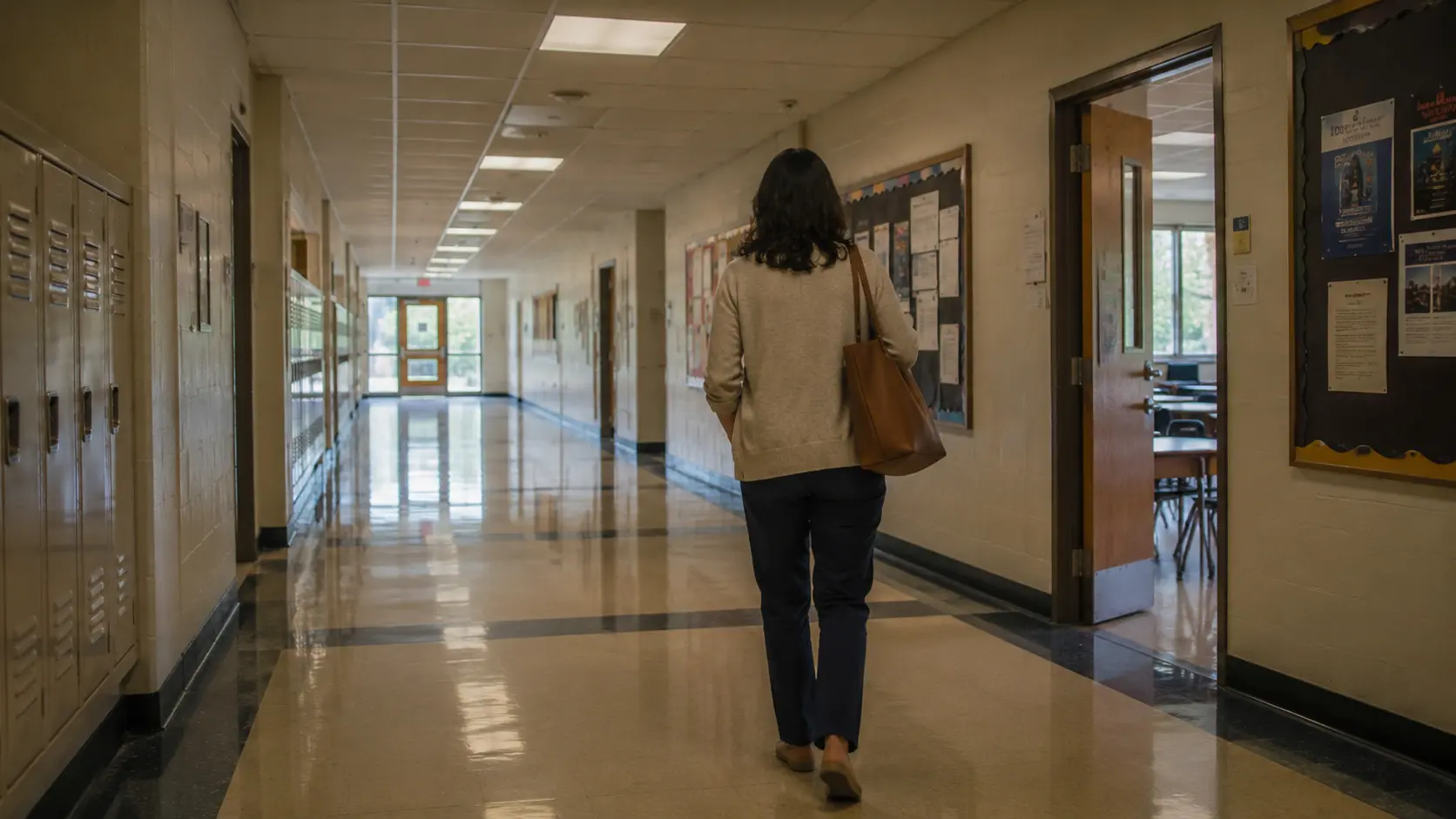

It is 6:47 on a Tuesday morning. A third-grade teacher calls in sick. The district's automated system sends the request to 34 substitutes on the approved list. Seventeen have already declined the district this semester. Nine do not answer. Four respond that they are unavailable. Three say they will take it. Two of those three cancel before 8 a.m. One shows up.
By Thursday, the same classroom has no one.
This is the substitute teacher crisis in miniature. It does not make national headlines the way permanent teacher vacancies do. But it plays out in some variation in school districts across the country every single day, and it quietly dismantles the stability that students and permanent staff depend on. For every district administrator wondering why the sub pool has collapsed, the answer is usually not complicated. The pipeline was never properly built in the first place.
If your district is still fighting the broader certified teacher shortage, start with our article The Teacher Shortage Will Not Fix Itself: How to Hire Educators in a Broken Market. This article focuses specifically on the substitute layer, which operates differently and requires its own strategy.
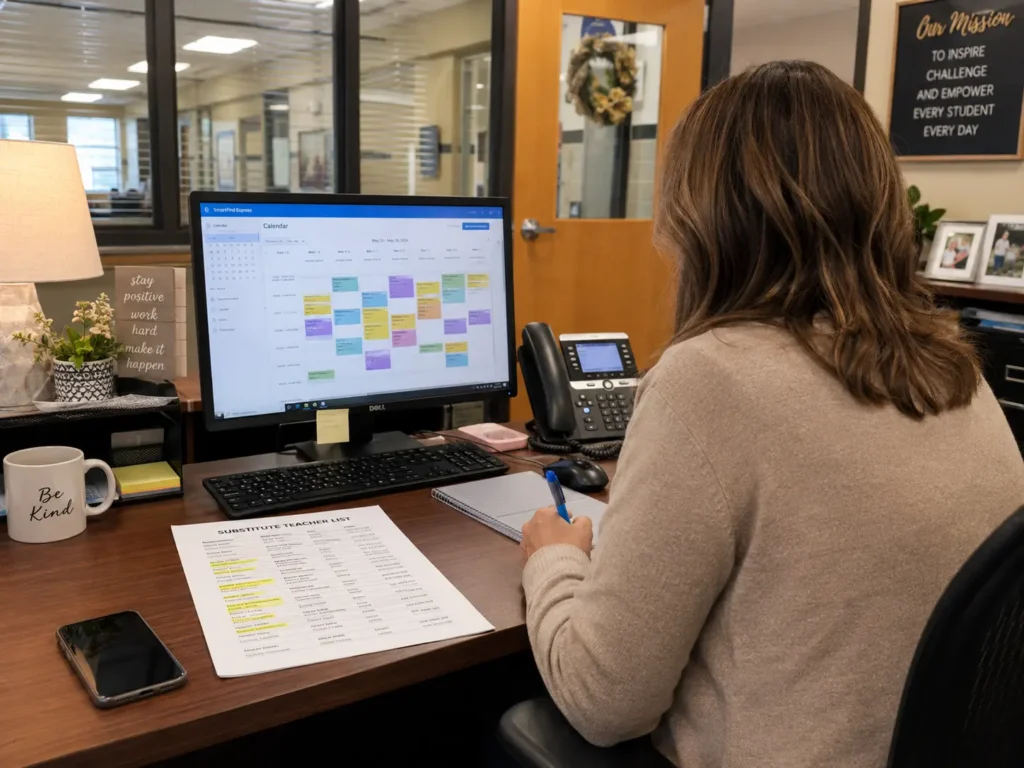 Districts tend to treat substitute recruiting as a low-priority administrative function, something handled by an HR coordinator with a form and a background check. That approach worked when the labor market was looser and teaching-adjacent work attracted enough applicants to build a reasonable bench.
It no longer works.
Substitutes are gig workers in every practical sense. They take assignments based on daily convenience, proximity, school culture, and pay. A school with a reputation for poor behavior management, unclear check-in procedures, or late payment will see its sub request fill rates drop. Word travels. Experienced substitutes who have options choose the assignments that feel worth showing up for.
According to the National Center for Education Statistics School Pulse Panel, more than 35% of public schools reported being extremely concerned about their ability to source substitute teachers in the most recent survey period. The concern is not distributed evenly. Schools in high-poverty districts, rural areas, and neighborhoods with reputational challenges report the worst fill rates.
The table below shows the structural differences between districts with weak substitute pipelines and those that maintain reliable coverage.
Districts tend to treat substitute recruiting as a low-priority administrative function, something handled by an HR coordinator with a form and a background check. That approach worked when the labor market was looser and teaching-adjacent work attracted enough applicants to build a reasonable bench.
It no longer works.
Substitutes are gig workers in every practical sense. They take assignments based on daily convenience, proximity, school culture, and pay. A school with a reputation for poor behavior management, unclear check-in procedures, or late payment will see its sub request fill rates drop. Word travels. Experienced substitutes who have options choose the assignments that feel worth showing up for.
According to the National Center for Education Statistics School Pulse Panel, more than 35% of public schools reported being extremely concerned about their ability to source substitute teachers in the most recent survey period. The concern is not distributed evenly. Schools in high-poverty districts, rural areas, and neighborhoods with reputational challenges report the worst fill rates.
The table below shows the structural differences between districts with weak substitute pipelines and those that maintain reliable coverage.
The districts in the right column did not get there by luck. They built those systems intentionally.
 The application and onboarding process is where most districts lose substitutes before they ever take an assignment. The following elements distinguish functional systems from broken ones.
The Scale of the Collapse
The substitute teacher market was already fragile before 2020. What followed made it structural. According to a U.S. Bureau of Labor Statistics Monthly Labor Review analysis of the substitute teacher labor market, close to 600,000 substitute teachers cover more than 30 million teacher absences in K-12 schools each year. Demand for substitutes has traditionally exceeded supply, but the gap widened dramatically after the pandemic. By 2022, 20% of all substitute requests were going unfilled nationwide. That is one in five classrooms without coverage on any given day of teacher absence. The problem compounds itself. When substitutes are unavailable, other teachers lose planning periods to cover classes. Administrators step in. Classrooms are merged. The existing permanent staff bears the operational cost of the gap, accelerating their own burnout and, eventually, their own departures. The substitute shortage and the permanent teacher shortage are not parallel problems. They feed each other.Why Substitutes Are Harder to Find Than You Think
Districts tend to treat substitute recruiting as a low-priority administrative function, something handled by an HR coordinator with a form and a background check. That approach worked when the labor market was looser and teaching-adjacent work attracted enough applicants to build a reasonable bench.
It no longer works.
Substitutes are gig workers in every practical sense. They take assignments based on daily convenience, proximity, school culture, and pay. A school with a reputation for poor behavior management, unclear check-in procedures, or late payment will see its sub request fill rates drop. Word travels. Experienced substitutes who have options choose the assignments that feel worth showing up for.
According to the National Center for Education Statistics School Pulse Panel, more than 35% of public schools reported being extremely concerned about their ability to source substitute teachers in the most recent survey period. The concern is not distributed evenly. Schools in high-poverty districts, rural areas, and neighborhoods with reputational challenges report the worst fill rates.
The table below shows the structural differences between districts with weak substitute pipelines and those that maintain reliable coverage.
| Weak Substitute Pipeline | Strong Substitute Pipeline |
| Reactive posting when absences occur | Pre-built bench of vetted, school-familiar subs |
| Same flat daily rate for all assignments | Differential pay for hard-to-fill schools and days |
| Paper-based or clunky application process | Mobile-first application that takes under 10 minutes |
| No communication between assignments | Regular touchpoints, updates, and school introductions |
| Subs discover school culture on day one | Orientation visits before first assignment |
| No tracking of which subs perform well | Performance data used to prioritize preferred subs |
| No recognition for consistent availability | Retention bonuses and priority booking for regulars |
Six Steps to Building a Reliable Substitute Pipeline
The following sequence reflects what high-performing districts do differently. It is a management system, not a hiring trick.- Audit your current bench before the school year starts. Review how many approved substitutes accepted at least one assignment in the prior year. In most districts, fewer than 40% of the approved list is actively working. Identify who is actually available versus who is simply on file.
- Widen the credential criteria strategically. Many states allow substitutes to hold a bachelor's degree in any field, without a teaching credential. If your district's approved list requires more than the state minimum, audit whether that requirement is producing better outcomes or just a smaller pool.
- Create school-specific substitute orientations. A substitute who knows the check-in process, the classroom management norms, and where supplies are kept will perform better, come back more often, and generate positive word-of-mouth. A 90-minute orientation before the first assignment costs almost nothing and meaningfully improves fill rates.
- Introduce differential pay for high-need assignments. Research published by the National Bureau of Economic Research and cited in the BLS Monthly Labor Review found that a bonus-pay program for substitute requests in the 75 lowest-fill-rate schools in the Chicago Public Schools district resulted in a 23% increase in fill rates. The effect extended beyond pay: schools with better fill rates also showed measurable improvements in student academic achievement. Pay is a signal. Use it deliberately.
- Build a preferred substitute program. Identify the substitutes who accept consistently, behave professionally, and get positive feedback from permanent staff. Prioritize their access to longer-term assignments, notify them of openings before the general pool, and recognize their contribution formally. This group is your operational backbone. Treat them that way.
- Track fill rate data by school and act on it. A districtwide fill rate of 78% may conceal one school at 55% and another at 94%. The problem and the solution are almost never uniform. Administrators who see school-level data can intervene with targeted incentives, orientation support, or principal coaching on substitute culture.
What an Effective Substitute Onboarding System Looks Like
The application and onboarding process is where most districts lose substitutes before they ever take an assignment. The following elements distinguish functional systems from broken ones.
- A mobile-friendly application that can be completed in under 12 minutes
- Automated background check initiation within 24 hours of application submission
- A clear timeline communicated to the applicant: when they will hear back, what the next steps are, when they will be cleared to work
- A digital packet covering district policies, school locations, and parking before the first assignment
- A named point of contact in the HR or operations team who responds to questions within one business day
- An optional in-person or virtual orientation offered monthly, not just at the start of the school year
- Direct deposit or expedited payment options, because substitutes who wait two weeks for a check do not come back